
Amplify what you’ve built.
FREQUENCY Systems amplifies the capabilities of established businesses through software that makes complex information easier to understand and operational work easier to complete.
Who leads FREQUENCY
Andry Alvarez
Founder, Chief Architect & Software Engineer
- Industrial operations
- More than nine years
- Operations work
- Refinery, warehouse and dock
- Production supervision, operator training
- Supervision and training

Andry Alvarez is the founder of FREQUENCY Systems. He brings more than nine years of industrial operations experience, spanning refinery, warehouse and dock work, production supervision and operator training.
At FREQUENCY, he defines the work, directs software development and checks results against source evidence. His focus is practical: turn a recurring operational problem into a process people can follow, test and improve.
Project Harbor is the first application of that approach. Through FREQUENCY, Andry is developing software to help established businesses build on the knowledge they already hold, reduce repeated work and make complex results easier to understand.
What you already have
Build on the knowledge already at work.
We start with the data your business already relies on, developing ways to reduce repeated work and make results clearer—from the first check to the final review.
Every established business carries knowledge in its records and in the people who understand them. Spreadsheets, databases and reports already support daily decisions. This is the legacy data we start from. The work around them can still be slow: comparing entries, repeating calculations, checking changes and explaining a result to someone else.
FREQUENCY develops software around those recurring tasks. The aim is to help teams carry more work through to completion, with a clearer view of what the information says and what needs attention.
- 01UnderstandStart from the records already in use.
- 02CheckConfirm what is required and flag what disagrees.
- 03CalculateWork out the result the task calls for.
- 04ReviewKeep corrections and prepare the result for review.
What the software is designed to change
- Fewer repeated steps
- The same checks and calculations run the same way each time, so the team does not redo them by hand.
- Clearer calculations
- Each result keeps the figures it came from, so a reviewer can see how it was reached.
- Easier review
- Corrections keep their history and open questions are listed, so review starts with what needs attention.
Design aims. No time savings have been measured.
Accuracy and clarity
A clear result. A clear explanation.
Accuracy depends on more than the final number. It also depends on the information supplied, the checks applied and the way corrections are handled.
Our approach keeps those pieces connected and makes unresolved issues visible for review. The goal is clarity at both levels: enough detail for the specialist, and an explanation others can follow.

First application
Project Harbor shows the work in practice.
Our first application uses survey records to calculate how much cargo has moved. The survey software checks supplied before-and-after weight figures, flags conflicting inputs and produces a result for review.
When a figure is corrected, it recalculates the quantity and retains the earlier report. Reviewers can see what changed and follow the history of the result.
Explore Project HarborThe Harbor walkthrough illustrates a simulated operation.
Configured scenario values, not field measurements.
Beyond Harbor
Where this can go next.
Inventory reconciliation is a proposed next application. Businesses already record what arrives, what leaves and what remains. Software could compare those records, identify differences and show which transactions need review.
Each industry brings its own records and rules. Our direction is to apply the same discipline to other recurring work: understand the information, check what matters and make the result clear enough to act on.
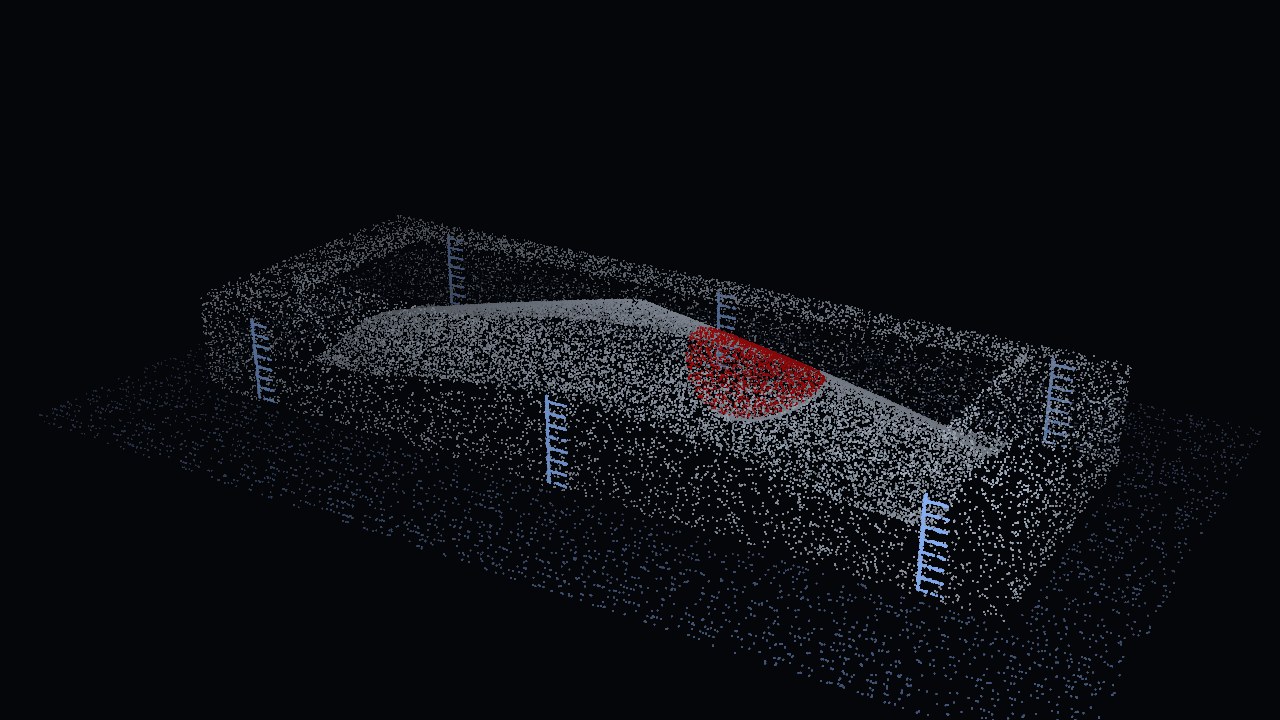
Illustrative application areas
Collaborate or invest
Make room for what comes next.
We’re seeking collaborators and investors to help develop the next application, starting with a real business problem and a clear way to judge the result.